
 中文版
中文版 Soochow University
 Search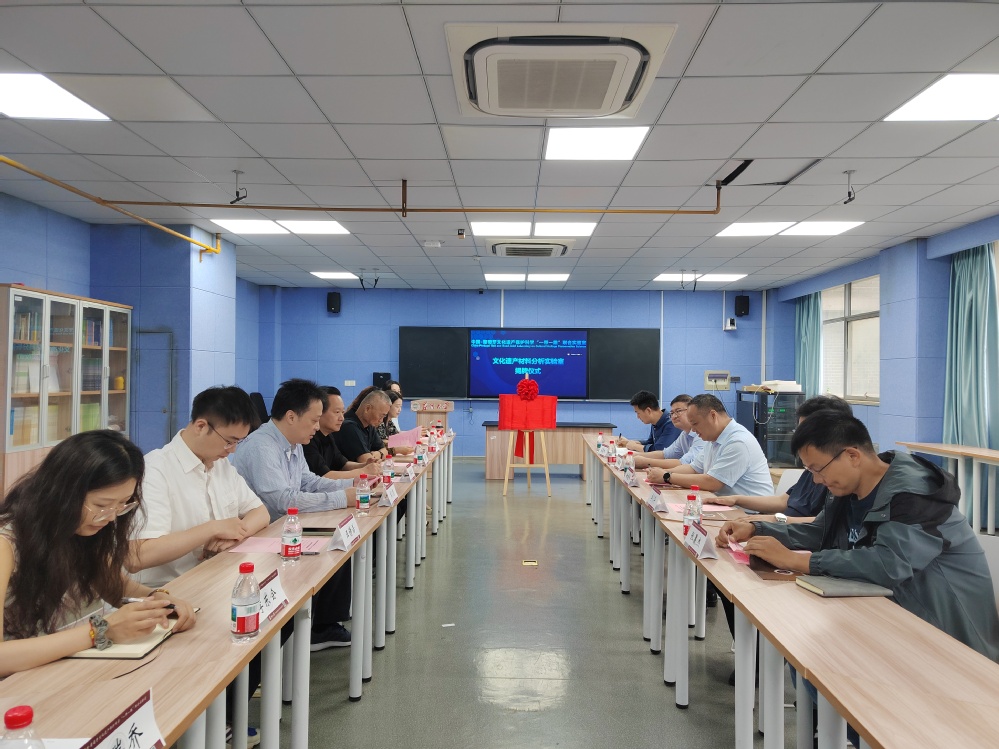
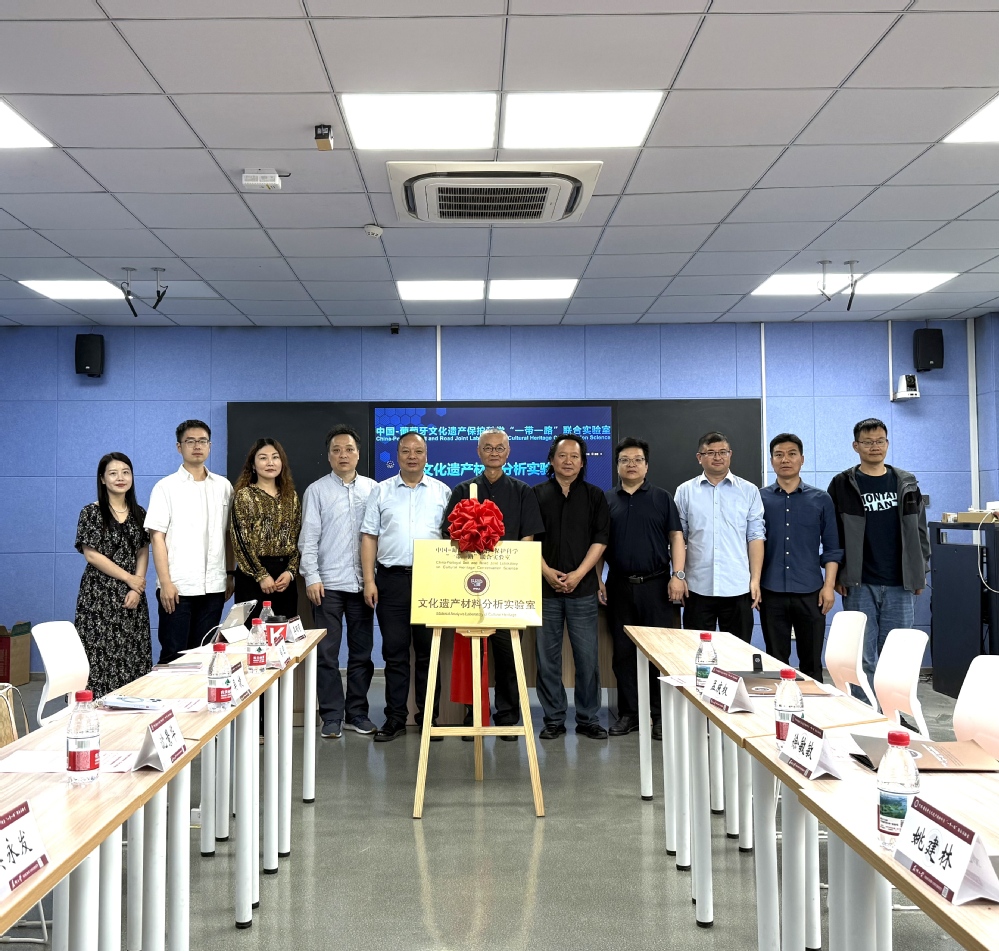
On May 16, the inauguration ceremony of the Materials Analysis Laboratory of Cultural Heritage was held at the Department of Materials and Chemical Engineering of Soochow University. In attendance were Yao Jianlin, Vice-President of Soochow University and member of the Party Committee; Wu Yongfa, Director of the Joint Laboratory and Dean of the School of Architecture; Shen Jinghua, Chief Scientist of the Joint Laboratory and member of the European Academy of Sciences and Arts; Wu Yao, Deputy Director of the Joint Laboratory and Vice Dean of the School of Architecture; Li Hua, Deputy Director of the Department of Materials and Chemical Engineering; Xu Minmin, Assistant Director of the Department of Materials and Chemical Engineering; and Meng Qingquan, Director of the International Scientific Research Cooperation Office of the Institute of Scientific Research. The ceremony was presided over by Wu Yao.
Under the witness of the participants, Yao Jianlin, Xu Minmin, Wu Yongfa, and Shen Jinghua jointly unveiled the plaque of the Materials Analysis Laboratory, signifying a significant breakthrough in the field of interdisciplinary research on cultural heritage by the laboratory.
Wu Yongfa stated that the joint laboratory has systematically laid out its work around four core tasks—talent cultivation, scientific research, international exchange, and industrial innovation. Particularly in the field of heritage materials analysis, a transnational collaborative innovation network has been established: the Hercules Laboratory of the University of Évora in Portugal focuses on interdisciplinary materials research, City University of Macau possesses similar cutting-edge equipment, and Soochow University relies on the School of Architecture and the Department of Materials and Chemical Engineering with a profound accumulation in the field of multi-scale analysis of ancient building materials. By integrating the advantages of the three parties, a national-level materials analysis platform has been formed, which will play an important supporting role in the on-site acceptance of the joint laboratory. It is bound to promote the sharing and integrated innovation of scientific research resources both within and outside the university, and accelerate the cultivation of new productive forces in the field of cultural heritage.
In his speech, Yao Jianlin emphasized that the construction of the joint laboratory must be based on the national strategic level and strive to create a coordinated development system integrating scientific research, cultural heritage preservation, and international dissemination. In deepening the mutual learning of civilizations, it should fulfill the mission of the new era. Regarding the direction of disciplinary construction, he pointed out that it is necessary to break through with “interdisciplinary intersections” and build an innovative system integrating humanities and sciences. Advanced technologies such as spectroscopic analysis should be used to build a scientific “eye” for the protection of ancient buildings. At the same time, it is necessary to deepen the “university-local co-construction” cooperation mechanism, take the inauguration ceremony as an opportunity to build an open academic community, enhance the innovation level of the laboratory through collaborative attacks with more disciplines, rely on Suzhou’s cultural heritage resources to promote the implementation of characteristic projects, and form a new model of cultural dissemination that can be demonstrated and promoted.
After the ceremony, the participants visited the research spaces and had an in-depth discussion on issues related to the research and application of heritage conservation materials.