
 中文版
中文版 Soochow University
 Search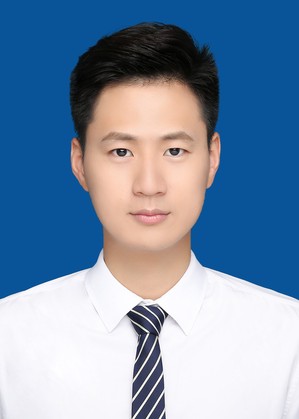
Info
Assistant to the Director of the Institute, Lecturer, Excellent young backbone teacher of Jiangsu Province
Research areas: Low energy buildings, Landscape architecture
Email: jdwang@suda.edu.cn
Current research directions
Assist the department director to conduct research in the following areas.
(1) Cultural heritage conservation technology:
Based on the platform of the national highest level for international science and technology cooperation of China --- The Sino-Portugal Joint Laboratory of Cultural Heritage Conservation Science (JLBRI) of MOST --- to study and promote technologies for revitalisation, regeneration and reuse of traditional and existing buildings.
(2) Building construction with “Carbon neutralization”:
According to the national call for Carbon neutralization in 2060, to study and promote technologies for passive house, energy-plus house and zero carbon buildings suitable for southern China.
(3) Green and epidemic prevention buildings:
According to the needs of society to prevent and limit epidemic outbreak, to study and promote architectural design and building technology to avoid indoor cross infection.
(4) Urban carbon neutralization with industry cluster of zero carbon buildings:
Such scientific research serves for supporting sustainable industrial and economic Development. Through the industrial transform of scientific research achievements as the purpose, to promote the close cooperation with government, industry, university, and user as partners for integrated green development, and to focus on enhancing the industrial transform of key technologies, such as ultralow-energy building technologies and products, by using new materials and renewable energy.
Education
2009.09 - 2013.06 Bachelor of Landscape Architecture, Suzhou University of Science and Technology
2013.09 - 2016.06 Master of Landscape Architecture, Suzhou University of Science and Technology (Won the 2015 National Scholarship, Outstanding graduate student)
Work
2021.06 - present Assistant Director, International Research Center of Green Building, Soochow University
2020.09 - 2021.05 Assistant Dean of Tianping College, Suzhou University of Science and Technology
2016.08 - 2020.08 Lecturer, Suzhou University of Science and Technology
2020.04 - present Editorial Board Member of New material New Decoration
Representative Publications
[1]Wang Jundi, Liu Zhiqiang, Shao Dawei, et al. Knowledge Mapping Analysis of Foreign Urban Green Space Research Based on CiteSpace[J]. Chinese Landscape Architecture, 2018,34(04):5-11.
[2]Wang Jundi, Liu Zhiqiang, Liu Liyin, et al. Study on the Influencing Mechanism of Spatial Differentiation of Green Rate of Built District of Typical Transects in China Based on Geodetector[J]. Ecological Economy, 2020,36(10):104-111.
[3]Wang Jundi, Liu Zhiqiang, Hong Genwei, et al. Progress and Prospect of Studies on Regional Differences of Urban Green Construction[J]. Huazhong Architecture, 2019,37(07):18-21.
[4]Wang Jundi, Liu Zhiqiang. Spatial-temporal Differences of the Influence of Urban Economic Development on Green Space[J]. Hubei Agricultural Sciences , 2016,55(16):4317-4321.
[5]Wang Jundi, Liu Zhiqiang. Research on the Spatial-temporal Differences of Driving Forces of Green Rate of Built District Growth in China[J]. Journal of Suzhou University of Science and Technology, 2017,30(03):30-36.
[6]Wang Jundi, Liu Zhiqiang, Shen Jinghua, et al. Analysis on the Differences of the Construction of Jiangsu Classical Gardens in Ming and Qing Dynasties——A Case of the Comparison of the Gardens in Wu Cultural Area and Weiyang Cultural Area[J]. Urbanism and Architecture, 2021,18(28):187-189+198.
[7]Wang Jundi, Liu Zhiqiang, Sheng Hao, et al. Spatiotemporal Differentiation Pattern and Its Influence Mechanism of Green Rate of Built Districts in Beijing - Tianjin - Hebei Urban Agglomeration[J]. Urbanism and Architecture, 2019,16(04):23-27.
[8]Liu Zhiqiang, Wang Jundi. Empirical Analysis on Regional Differences of Urban Green Space Construction Level in China Based on Theil Indices[J]. Chinese Landscape Architecture, 2015,31(03):81-85.
[9]Liu Zhiqiang, Wang Jundi, Hong Genwei. The Relation Between Green Space And Land Use Of Chinese Cities: Based On The Data Of Provinces From 1996 To 2013[J]. Planner, 2016,32(06):98-104.
[10]Liu Zhiqiang, Wang Jundi, Shao Dawei, et al. Spatial Pattern Evolution of Provincial Green Rate of Built Districts in China[J]. Journal of Northwest Forestry University, 2019,34(01):267-272.
[11]Liu Zhiqiang, Zhou Xiaoya, Wang Jundi, Hong Genwei. Research on Spatio-Temporal Differentiation Characteristics of the Construction Level of Green and Plaza Land in China[J]. China City Planning Review, 2020,29(03):15-25.
[12]Liu Zhiqiang, Chen Lie, Wang Jundi, Hong Genwei. Difference and Potential of Park Green Space from the Perspective of Population Scale: A Case Study of Cities at Prefecture Level and above in China[J]. Areal Research and Development, 2021,40(02):40-44+55.
[13]Liu Zhiqiang, Zhou Xiaoya, Wang Jundi. Spatial Pattern Evolution of Urban Green Rate of Built Districts in China[J].Urban Problems, 2019(09):28-36.
[14]Peng Qian, Liu Zhiqiang, Wang Jundi, Hong Genwei. Research on Coupling and Coordinating Spatial-Temporal Pattern of Green Space Rate of Built District and Public Recreational Green Space Per Capita in China[J].Modern Urban Research, 2020(10):89-96.
[15]Liu Zhiqiang, Zhang Ying, Wang Jundi, Hong Genwei. Spatial Pattern Evolution of Urban Green Rate of Built Districts in China[J].Urban Problems, 2019(09):28-36.
[16]Zhai Yuchen, Liu Zhiqiang, Wang Jundi, Hong Genwei. Spatial-temporal Pattern Evolution of Urban “Park-Population” System Coupling Coordination in Jiangsu Province[J].Journal of Chinese Urban Forestry, 2021,19(04):23-28.
[17]Liu Zhiqiang, Liu Liyin, Wang Jundi, Hong Genwei. Analysis on the Relationship among Park Green Space, Urban Population and Construction Land in China[J].Landscape Architecture, 2020,27(08):120-125.
[18] Liu Zhiqiang, Zhang Yang, Wang Jundi, Hong Genwei. Analysis on the Relationship among Park Green Space, Urban Population and Construction Land in China[J]. Journal of Chinese Urban Forestry, 2020,18(02):62-66.
[19] Liu Zhiqiang, Wu Xiaohui, Wang Jundi, Hong Genwei. Analysis on Regional Difference of Green Rate of Built District in China from 1996 to 2016[J]. Journal of Human Settlements in West China, 2019,34(02):58-66.
[20]Liu Zhiqiang, Wang Yang, Wang Jundi, Yu Hui. Multiscale Analysis of Regional Difference of Public Recreational Green Space Per Capita in China[J]. South Architecture, 2019(04):122-126.
[21]Xu Yingqiu, Liu Zhiqiang, Wang Jundi, Hong Genwei. Research on Influencing Mechanism of Regional Difference of Green Rate of Built District of Cities Along Land-Bridge Passage Based on Transect-Geodetector[J]. Landscape Architecture, 2019,26(08):71-76.
[22]Liu Zhiqiang, Li Tongshan, Wang Jundi, Hong Genwei. Multiscale Analysis of Regional Difference of Green Rate of Built District in China[J]. Chinese Landscape Architecture, 2019,35(07):72-76.
Representative Projects
2019.04 - 2021.04
Analysis on the different characteristics and causes of classical garden construction in different cultural areas of Jiangsu Province, Jiangsu University Philosophy and Social Science Research Project(2019SJA2134), project leader.
2018.10 - 2020.08
Study on the influence mechanism of spatial differentiation of green space rate in built-up areas of typical transects in China based on Geographic Detector, Key Scientific Research Projects of Suzhou University of Science and Technology(2018JJXM001), project leader.
2018.01 - 2021.12
Research on the Pattern, Evolution and Mechanism of the Spatial Differentiation of Green Space Rates in China's Urban Built-up Areas Based on Spatial Quantitative Analysis, National Natural Science Foundation of China(51778389), Important member.
2019.01 - 2022.12
Research on the Differentiation Mechanism of Urban and Rural Non-Construction Land Conversion and Its Control Countermeasures from the Perspective of Multi-scale Time and Space——Taking Suzhou as an Example, National Natural Science Foundation of China(51878429), Important member.