
 中文版
 Soochow University
 Search
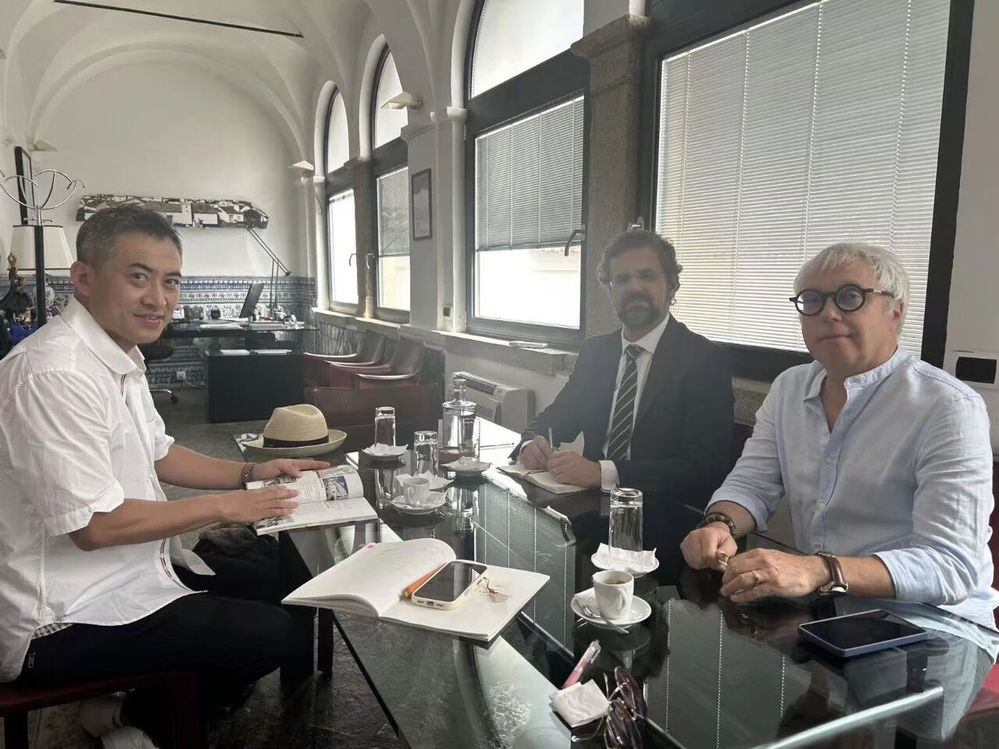
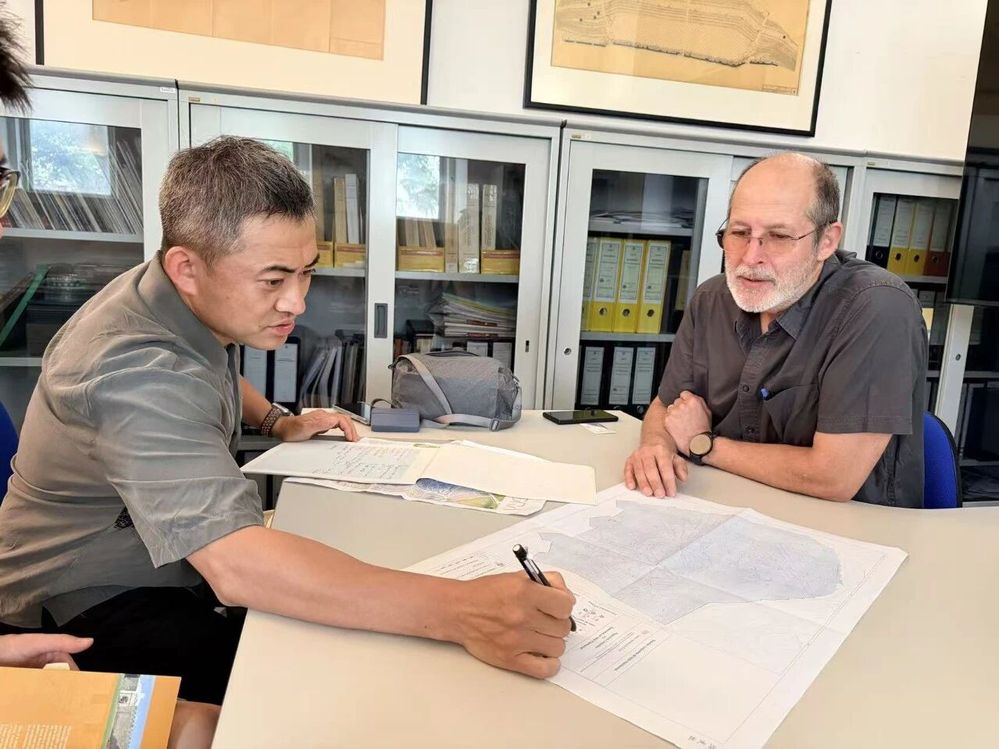
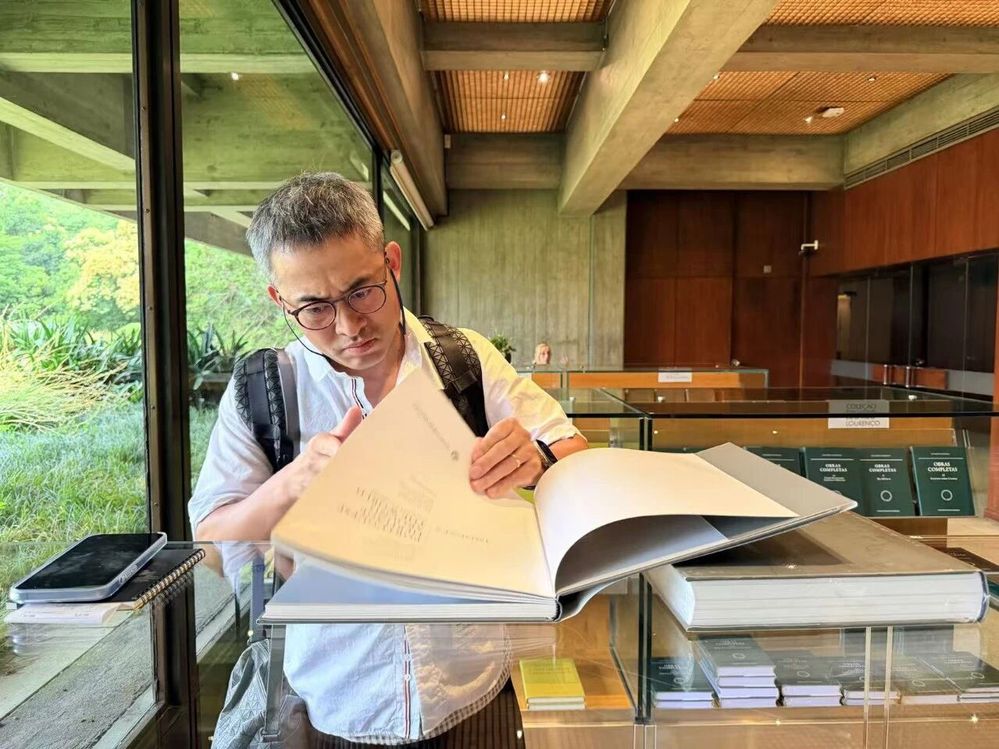
To steadily advance the development of the Belt and Road Cultural Heritage Database, fill the gap in digital cultural heritage data for the Portuguese region, and deepen international cooperation between China and Portugal in cultural heritage conservation under the Belt and Road Initiative, a research team led by Zhao Chong, Head of the Data Department of the Joint Laboratory, conducted fieldwork in Portugal in July 2026. The mission included exchange seminars, on-site surveys, and historical data collection. Shan Chao, the Joint Laboratory’s resident representative in Portugal, accompanied the team for local liaison work to ensure all research tasks were implemented smoothly and efficiently.
The research prioritized international research coordination and university-enterprise collaborative development. The team’s first stop was the University of Évora, the foreign partner institution of the Joint Laboratory. Zhao Chong and Shan Chao attended a special panel discussion with the Rector of the University of Évora, Professor António Candeias, foreign lead of the Joint Laboratory, Professor Nick Schiavon from the Hercules Laboratory, and Professor Pedro Guilherme, Dean of the Faculty of Architecture of the University of Évora. The two sides held in-depth discussions and reached consensus on two core themes: upgrading the Joint Laboratory and co-developing the Belt and Road Cultural Heritage Database. Both parties agreed to leverage the high-quality educational and research resources of the two universities to carry out in-depth long-term cooperation including digital research on cultural heritage, cross-border sharing of historical materials, and joint research on key scientific projects. This will lay a solid foundation for standardized database development, international academic exchanges, and the translation of research outcomes into practical applications.
Following the discussion, the research team visited key cultural heritage sites in Lisbon, Sintra and other regions to investigate landmark historic structures including the Palace of Sintra, Pena Palace, the Mafra National Palace complex, Évora Cathedral and the Chapel of Bones. The team documented and organized fundamental information such as architectural typologies, urban block fabric and spatial characteristics, supporting the modelling, archiving and data verification of the cross-border historical database.
A core objective of this field trip was the collection of rare overseas historical materials. The team visited Livraria Bertrand in Lisbon, founded in 1732 with a nearly 300-year history. Researchers identified, selected and purchased a batch of scarce and valuable historical documents, bringing back 30 kilograms of exclusive historical collections. The archive includes original maps and documentary photographs of the old towns of Lisbon and Évora dating from 1905 to 1949, professional survey drawings of the Évora Aqueduct from 1906, and historical images of churches in Porto from 1919, among other unique historical records. These materials effectively enrich the digital historical archive for cultural heritage in the Portuguese region. Meanwhile, the team established a long-term and stable cooperation mechanism with local historical institutions and practitioners, creating a regular and professional channel for continuous updates of regional historical materials and expansion of database holdings. In addition, the team collected comprehensive distribution data and full catalogues of built heritage across Portuguese-speaking regions in South America, Africa and Asia at the Calouste Gulbenkian Archive, laying core groundwork for the subsequent construction of a systematic relational cross-border cultural heritage database.
The precious historical records and field information gathered during this research will comprehensively empower the development of the Belt and Road Cultural Heritage Database. The database innovatively adopts a dual-dimensional framework combining historical archives and current survey data. It uses open-source satellite maps to precisely mark historical cultural heritage sites and gradually completes core attribute information such as construction dates, architectural specifications and conservation grades of ancient buildings. The project will first establish digital archives for 36 to 40 key heritage sites in Évora and priority zones in Lisbon, before expanding coverage to major areas such as Porto. Drawing fully on the mature experience of the Macao Cultural Heritage Database, the project strives to build a standardized, regulated, replicable and scalable digital archive system for cross-border cultural heritage.
It is reported that the project team will take the outcomes of this overseas field research as core support to accelerate subsequent key tasks including data sorting, entry and modelling, and archive compilation. Five master’s students will officially join the project team in mid-July to provide dedicated support for basic data processing and archive refinement. The team plans to conduct supplementary research in Macao in August to further expand the material reserves of the cross-border database.
This special field research mission in Portugal has successfully completed key tasks including overseas historical material acquisition and visits to foreign partner institutions. It consolidates the foundation of the Belt and Road Cultural Heritage Database and facilitates tangible and deepened China-Portugal international cooperation in digital cultural heritage conservation. Moving forward, the project team will continue to focus on the digital conservation and research of cross-border cultural heritage. Supported by field investigations and international collaboration, the team will keep optimizing and upgrading the cross-border digital archive system for cultural heritage, and strive to build a benchmark demonstration project for China-Portugal civilizational exchange and mutual learning, as well as the digital inheritance of transnational historical context.