
 中文版
 Soochow University
 Search
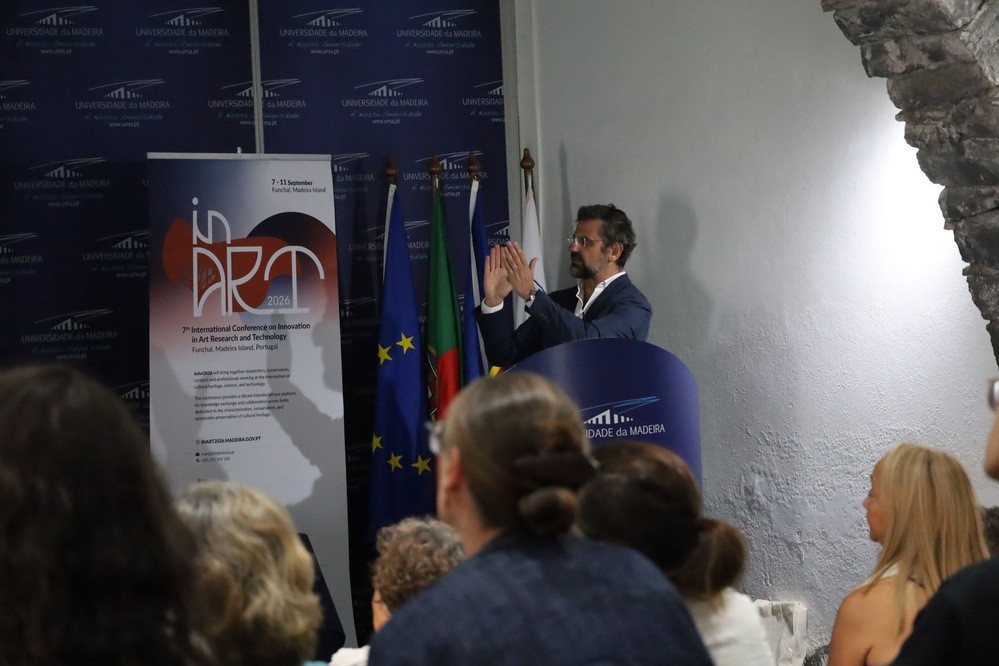
From 7 to 11 September 2026 local time, the 7th International Conference on Innovation in Art Research and Technology (InART2026) was held in Funchal, the capital of Madeira, Portugal. The main venue was the Colégio dos Jesuítas of the University of Madeira. Co-hosted by the University of Évora, a partner institution of the Joint Laboratory, its HERCULES Laboratory, and the Direção Regional de Cultura of Madeira, the conference saw the China-Portugal Belt and Road Joint Laboratory on Cultural Heritage Conservation Science (hereinafter referred to as the Joint Laboratory) participate in full depth as one of the conference partners in event organisation and academic exchanges. More than 200 experts and scholars from dozens of countries worldwide gathered to conduct in-depth academic discussions on interdisciplinary integration and technological innovation in cultural heritage conservation.
Dedicated to innovative research on cultural heritage conservation, the InART conference series was launched in Évora, Portugal in 2013. Subsequent editions have been successfully held in Ghent (Belgium), Parma (Italy), Paris (France), Oslo (Norway) and other cities. It consistently strives to break disciplinary barriers between natural sciences, humanities, arts and heritage conservation, building a global and diversified platform for academic exchange. Centred on fostering scientific interaction, academic debate and collaborative innovation in cultural heritage, this year’s conference brought together researchers from archaeology, art, architecture, materials science, digital technology and other fields. Participants explored the scientific conservation and innovative inheritance of archaeological relics, artworks, built heritage and other forms of cultural heritage through cross-disciplinary and cross-sector dialogues, injecting fresh research momentum into global cultural heritage conservation.
Five cutting-edge core themes were set for the conference, closely aligning with current research hotspots and development trends in international heritage conservation: non-destructive testing and analysis of cultural relics; digitalisation and sustainable innovation of cultural heritage; development and application of advanced technological tools; sustainable conservation materials and environmental management; and digital heritage and digital management of museum collections. A special workshop on Digital Technologies and On-site Physicochemical Analysis was held on the opening day. The conference adopted a diverse format combining plenary keynote speeches, parallel academic sessions and poster presentations, alongside cultural activities including field visits to Madeira’s cultural heritage sites. It offered an excellent platform for scholars to present research outputs, share experience and engage in academic debate, comprehensively showcasing the latest findings, technological breakthroughs and practical experience in global cultural heritage conservation.
The conference serves as a vivid example of deepened Sino-Portuguese scientific research cooperation and joint development of an international academic platform. The conference chairs were Professor António Candeias, Rector of the University of Évora, Founder of the HERCULES Laboratory and Portuguese Lead of the Joint Laboratory, Researcher Sara Valadas of the HERCULES Laboratory, and Professor Peter Vandenabeele of Ghent University, Belgium. Professor Candeias has long been committed to scientific research on cultural heritage conservation and Sino-Portuguese international cooperation. He officially assumed the office of Rector of the University of Évora in May 2026 and chaired this conference, which fully demonstrates his commitment to advancing Sino-Portuguese heritage research collaboration. As co-founding partners of the Joint Laboratory, the University of Évora and the HERCULES Laboratory provided critical academic support and organisational guarantees for the success of the conference, well illustrating the achievements of the Joint Laboratory in “joint construction, shared benefits and coordinated development”.
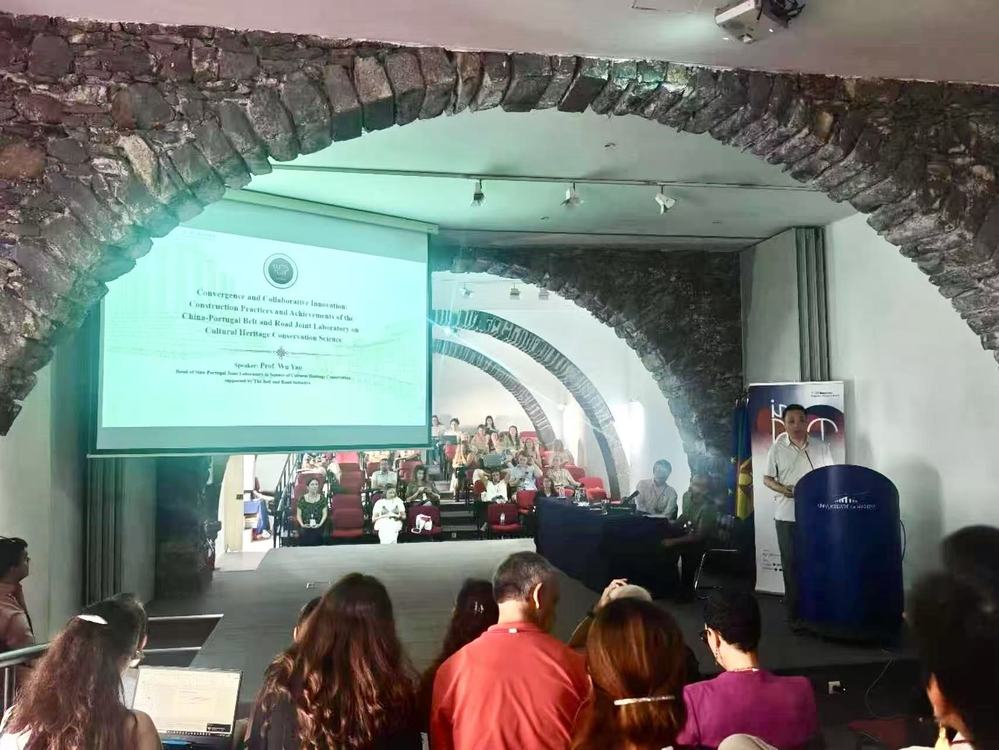
During the conference, Professor Wu Yao, Director of the Joint Laboratory, served on the conference scientific committee. He took an active part throughout the event in organisation, academic review and panel discussions, promoting connections between Chinese and international academic resources and research partnerships. Professor Wu delivered a keynote presentation entitled Interdisciplinarity and Collaborative Innovation. Based on the interdisciplinary nature of cultural heritage conservation, his talk elaborated on the vital role of multi-disciplinary integration and multi-technology synergy in heritage revitalisation, conservation and research innovation. He shared practical experience and development ideas for interdisciplinary research, offering new perspectives and approaches for the innovative development of global cultural heritage conservation, which drew wide recognition and lively discussion among international attendees.
The successful convening of InART2026 not only showcased cutting-edge advances in the digital conservation, sustainable inheritance and technological innovation of cultural heritage worldwide, but also further deepened research exchanges and cooperation between China, Portugal and the global community in cultural heritage. Approved by the Ministry of Science and Technology in 2020, the China-Portugal Belt and Road Joint Laboratory on Cultural Heritage Conservation Science is led by Soochow University and co-established with the University of Évora in Portugal and City University of Macau. It is the only national Belt and Road Joint Laboratory in China specialising in built cultural heritage conservation. Going forward, leveraging high-end international academic platforms such as this, the Joint Laboratory will continue to advance interdisciplinary research on cultural heritage. With interdisciplinarity and collaborative innovation at its core, it will further promote international research cooperation, transformation of technological achievements and exchanges of academic talent, contributing wisdom and strength to advancing the Belt and Road Initiative and supporting high-quality, sustainable development of cultural heritage conservation.