
 中文版
 Soochow University
 Search
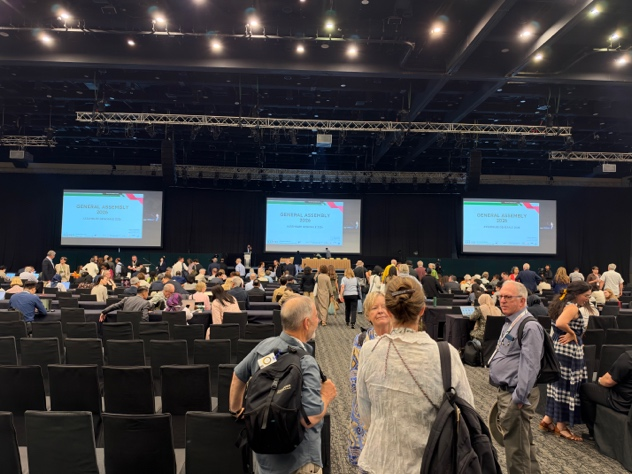 Scene of the ICOMOS GA 2026
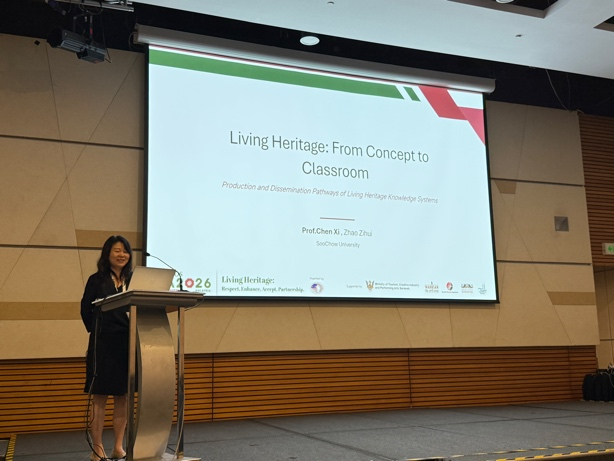 Professor Chen Xi delivering her presentation
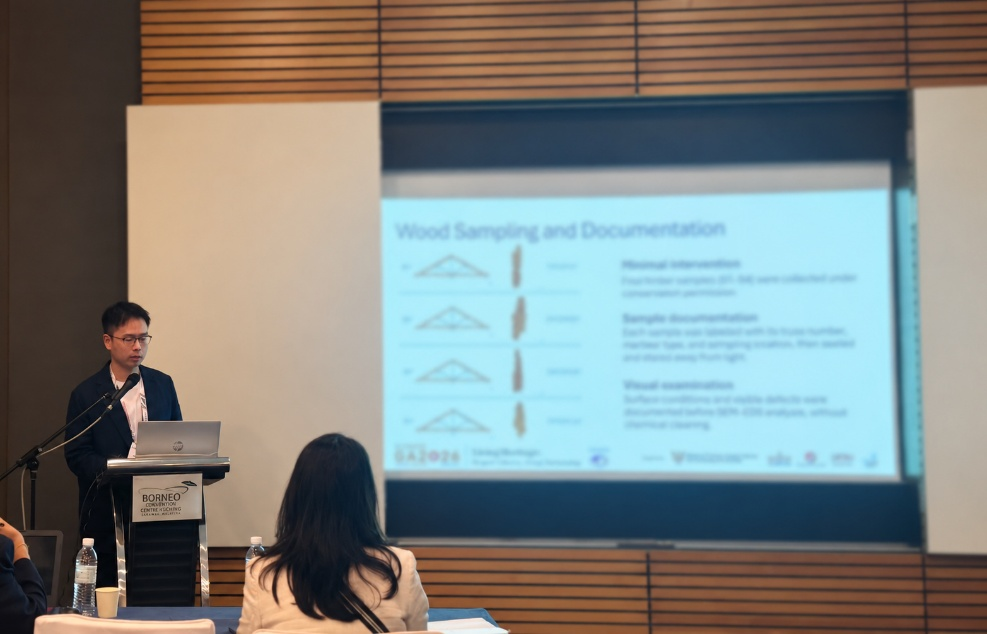 Associate Professor Wang Shiruo delivering her presentation
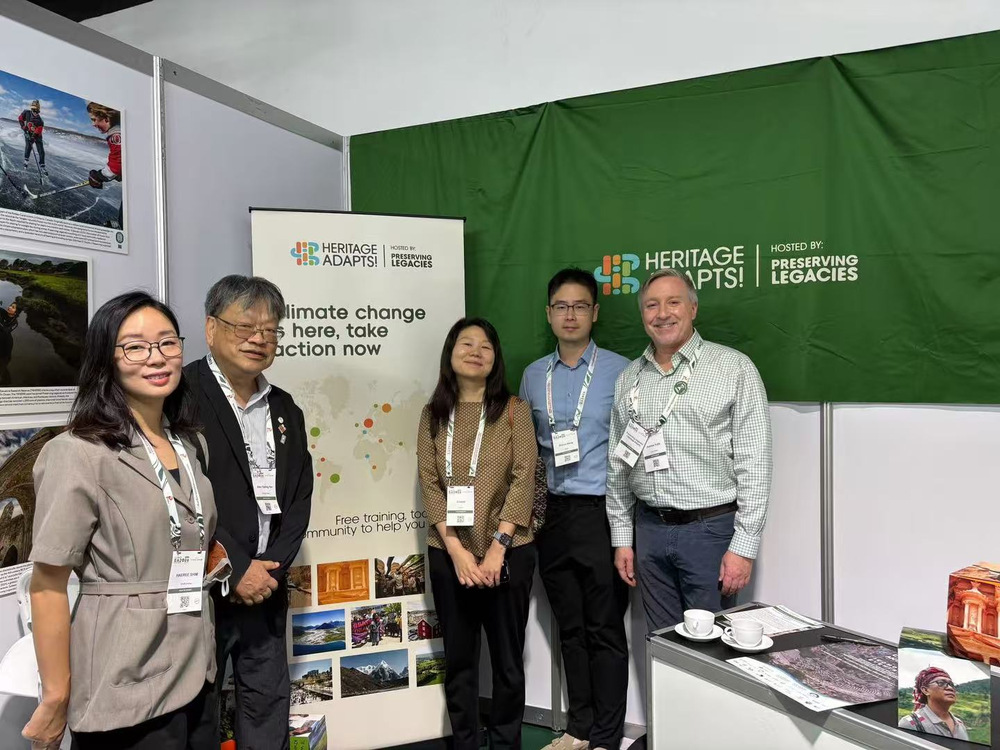 The two researchers exchanging views with peers from home and abroad
From 17 to 24 October, the 22nd ICOMOS General Assembly and Scientific Symposium (ICOMOS GA2026) convened in Kuching, Malaysia. Professor Chen Xi and Associate Professor Wang Shiruo from the China-Portugal Belt and Road Joint Laboratory on Cultural Heritage Conservation attended the event, delivering separate thematic presentations and engaging in in-depth exchanges with international peers to showcase the laboratory’s latest research advances in cultural heritage conservation.
The International Council on Monuments and Sites (ICOMOS) is a globally influential professional organisation in cultural heritage conservation. Its triennial General Assembly stands as a flagship academic event for the heritage conservation community worldwide. Centred on the theme Living Heritage: Respect · Enhance · Accept · Partnership, this year’s Assembly brought together more than 1,800 experts, scholars and heritage practitioners across the globe. Discussions spanned living heritage safeguarding, heritage value recognition, conservation technology innovation, knowledge transmission and international collaboration, forming a vital platform for academic dialogue and practical cooperation in global cultural heritage conservation.
As an expert member of the ICOMOS Scientific Committee on Education and Training, Professor Chen Xi, Assistant to the Director of the Joint Laboratory, was invited to present at the session Knowledge, Standards, Guidelines and Resources for Education and Training in Architectural Conservation. Her talk, entitled Production and Dissemination Pathways of Living Heritage Knowledge Systems, examined the generation, organisation and communication of knowledge for living heritage conservation. It explored the formation mechanisms and transmission routes of heritage knowledge systems, underscoring the significance of knowledge infrastructure in advancing heritage value appreciation, conservation education and public engagement, and offering fresh perspectives for theoretical research and practical work on living heritage.
Associate Professor Wang Shiruo presented in Symposium 2B: Enhance 2, with a paper titled Material-informed Intelligent Pathology Assessment of Historic Timber Roof in Tsao Hall, Soochow University. Taking the historic timber roof structure of Tsao Hall at the former Soochow University site as the research subject, the study integrates on-site survey of architectural heritage, characterisation of timber material properties and AI-based defect identification. It investigates the synergistic application of materials science and intelligent inspection techniques in diagnosing deterioration in historic timber structures. The presentation demonstrated the potential of interdisciplinary approaches for identifying material decay and delivering evidence-based conservation of built heritage, introducing new avenues for detailed documentation, condition assessment and preventive conservation of architectural assets.
Throughout the Assembly, the two researchers held extensive discussions with international specialists on topics including education and communication for built heritage conservation, intergenerational transmission of living heritage knowledge, and digital and intelligent technologies for cultural heritage. They gained further insights into global research frontiers in the field and exchanged views on shared research priorities and potential future collaboration.
In recent years, the Joint Laboratory has consistently advanced interdisciplinary research and international academic cooperation in cultural heritage conservation, with active explorations in heritage conservation education and outreach, traditional construction craftsmanship, and digital and intelligent heritage technologies. Participation in this conference not only highlighted the laboratory’s research progress but also consolidated its academic ties with the global cultural heritage conservation community. Moving forward, the Joint Laboratory will leverage its disciplinary strengths and platform capacity to deepen international academic partnerships, foster integrated development of theory, technology and practice for heritage conservation, and continuously raise the international profile of its research.